2026CADElectronicsData
Data Center Thermal Management System
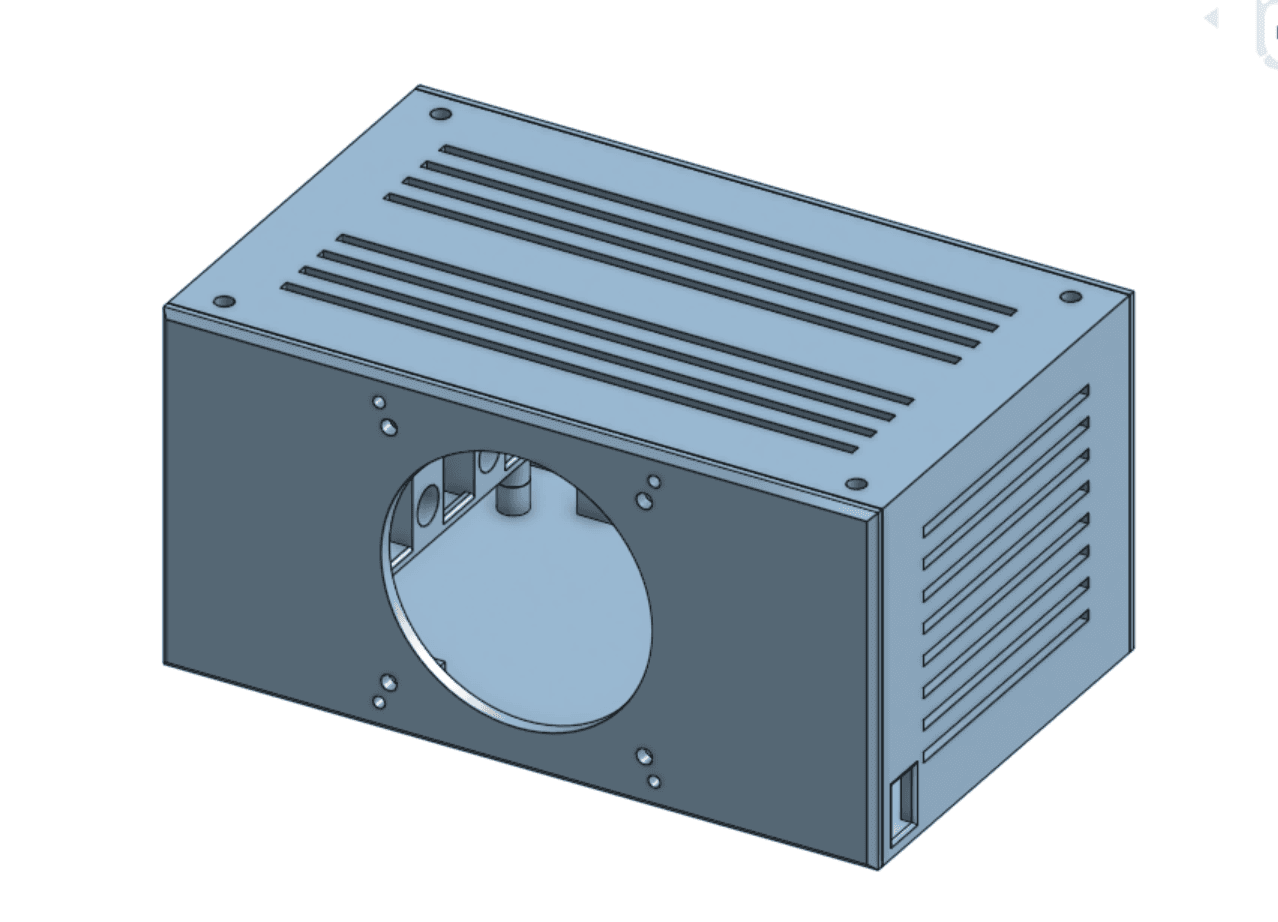
A 3D-printed server bay enclosure instrumented with real sensors and PWM fan control, paired with a scikit-learn model that predicts hotspot temperatures.
OnshapeArduinoscikit-learnFDM 3D printing
Role
CAD design, electronics, and data modeling
Goal
Design and instrument a 3D-printed server bay enclosure with real temperature sensors, PWM fan control, and an Arduino data logging pipeline, then train a scikit-learn regression model to predict hotspot temperatures from fan speed and power input.
Challenge
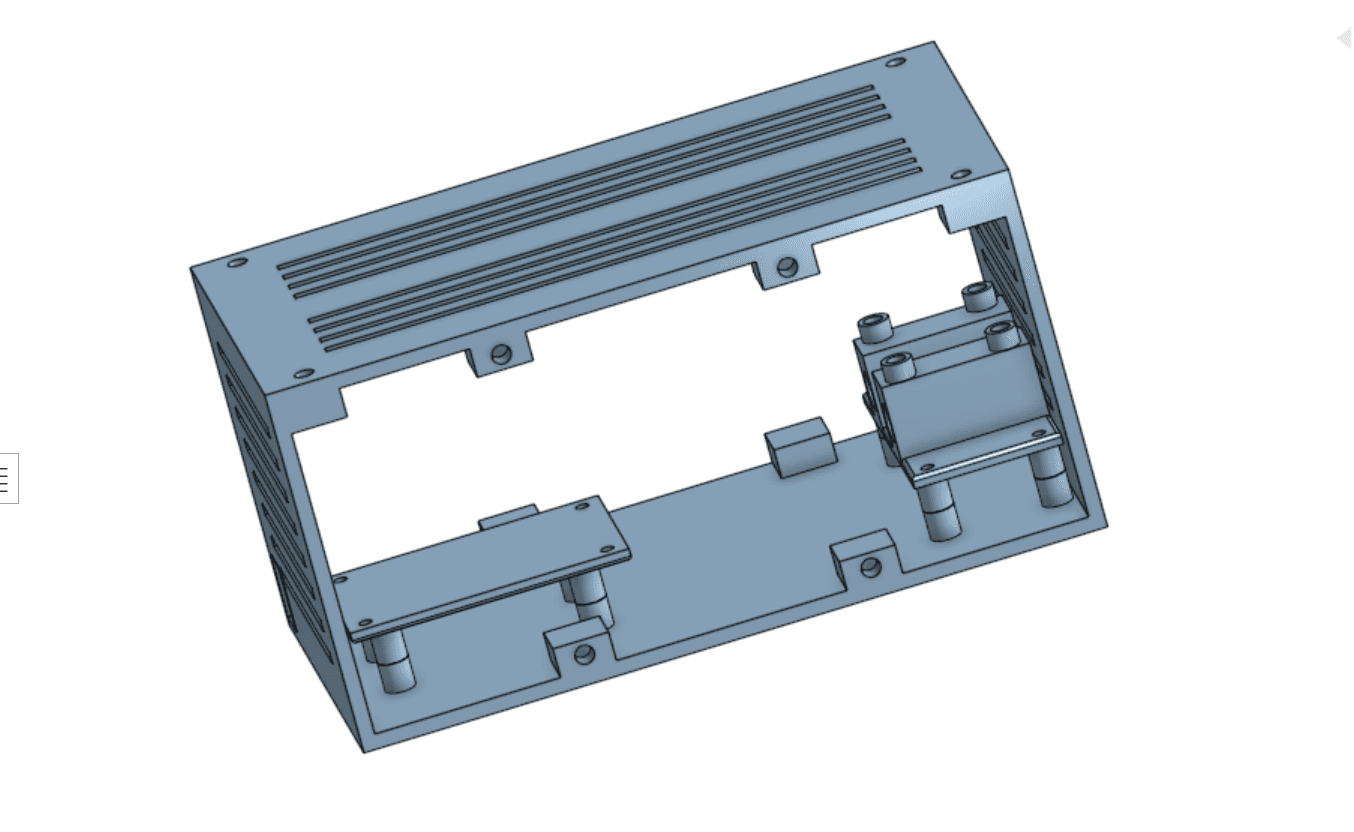
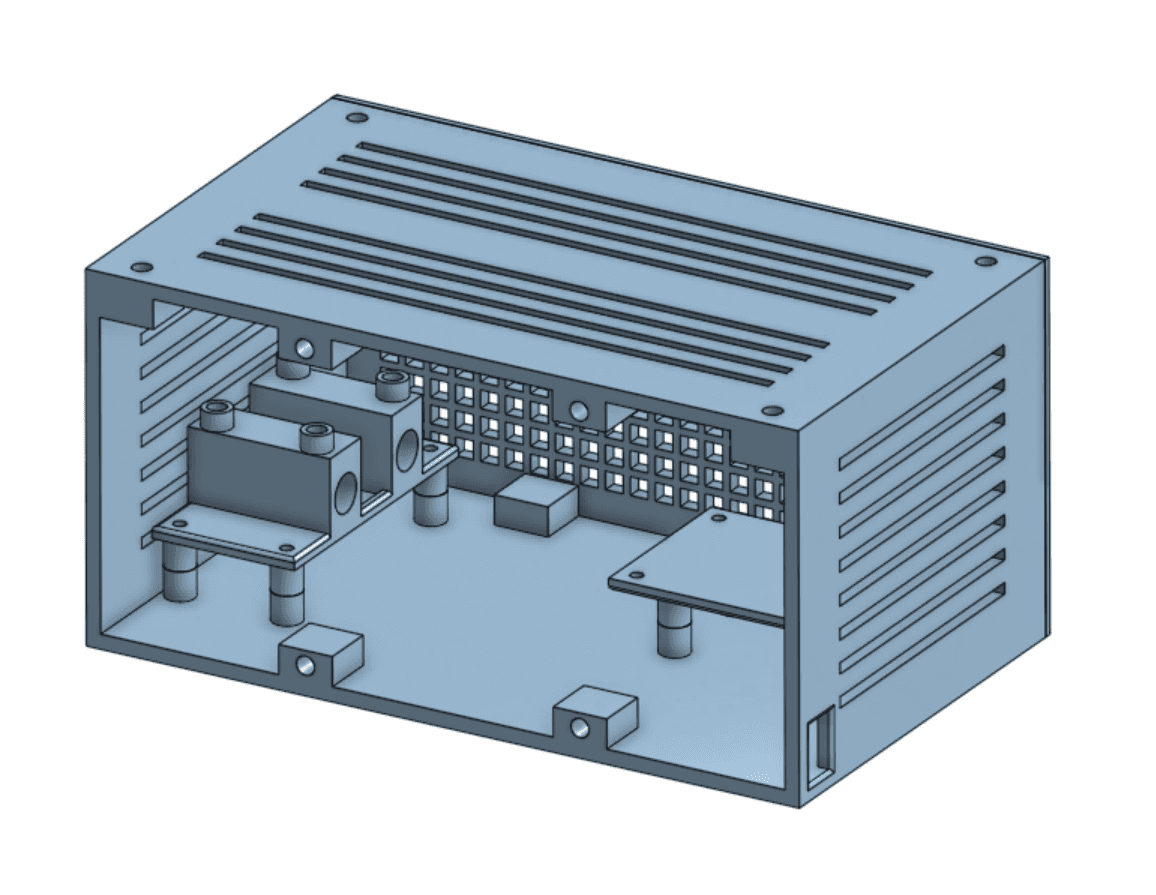
The biggest challenge was designing a multi-part enclosure that fit all internal components including the Arduino platform, resistor bracket, four sensor mounts, and wiring corridor within a 192x112mm interior while maintaining structural integrity for heat-set insert bosses, safe thermal clearance between resistors and PLA walls, and proper airflow geometry from inlet grille to fan exhaust.
Solution
The enclosure was modeled in Onshape across six separate part studios including the main body, front grille panel, fan mount panel, resistor bracket, sensor mounts, and Arduino platform, each designed for independent iteration and M3 bolted assembly. Server rack aesthetics including horizontal vent slots, a 25-column inlet grille, and chamfered exterior edges were integrated without compromising wall thickness or insert boss geometry. Internal components were positioned to create a deliberate front-to-rear thermal gradient, with the resistor bracket rotated 90 degrees to resolve a clearance conflict with the Arduino platform and open a dedicated wiring corridor between them.
Results
- Six independent Onshape part studios bolt together into one enclosure with no interior clearance conflicts.
- Resistor bracket rotated 90 degrees to resolve an Arduino platform clash and free up a dedicated wiring corridor.
- Front-to-rear thermal gradient plus real sensor logging fed a scikit-learn model predicting hotspot temperatures from fan speed and power input.